Reefer containers refer to special containers with excellent thermal insulation performance capable of maintaining specific low temperature, widely used for transporting and storing various perishable goods. Reefer containers can be categorized based on temperature requirements as all-purpose reefer containers, deep-freeze reefer containers, low-temperature reefer containers, as well as customized reefer containers (such as temperature-controlled containers and ultra-low temperature containers). Chinese reefer container industry is highly concentrated, with major manufacturers including CIMC, Dong Fang, FUWA Guangdong among which CIMC holds a market share as high as 60-70%. Geographically, Chinese reefer container manufacturers are mainly located in Qingdao, Shanghai, and Guangzhou, with the eastern region accounting for 80-90%. In China, PU insulation materials and their application processes are mature and stable in the production of reefer containers, with few competing materials. Discontinuous panel process and pouring foam are applied in the insulation walls of reefer containers.
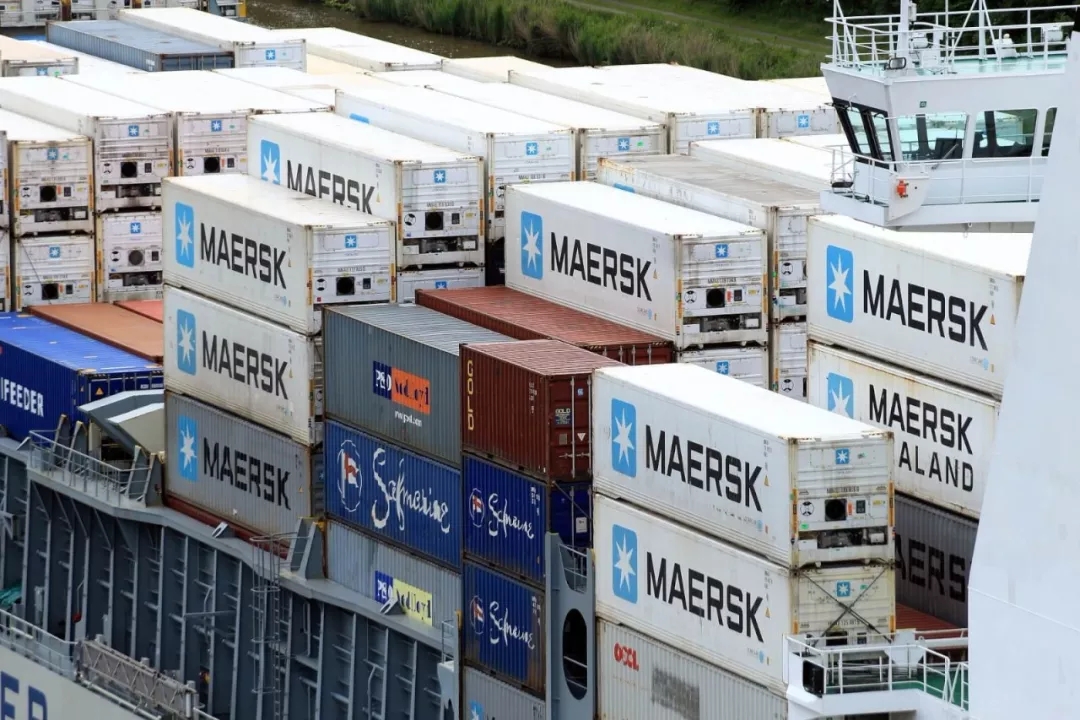
However, China’s reefer container industry faces severe overcapacity, with a significant decline in production and sales of new containers. The global container industry experienced a 13% boost in capacity in 2021 due to various supply chain issues, increasing transit times, according to Drewry data. China’s container output also surged to unprecedented levels. In 2023, relaxed supply chain constraints during the global pandemic, stagnation in trade, continual expansion of surplus shipping containers, low growth in global cargo trade, geopolitical events, and softening demand left the industry with an excess of 13 million containers globally. China’s reefer container industry exhibited the feature of “severe overcapacity of new containers and a significant decline in production and sales”. Nearly 100% of the world’s reefer containers are produced by Chinese manufacturers, and the production of reefer containers in China is highly concentrated.
From January to August 2023, the top four reefer container manufacturers, CIMC, Dong Fang, FUWA Guangdong and MCI, produced 113,000 TEUs of reefer containers. The full-year output of reefer containers is estimated at *** TEUs, a decrease of ***% compared to the previous year, according to DynaLiners data. PU insulation materials and their application processes are mature and stable in the production of reefer containers, with few competing materials. Taking the mainstream 40-foot standard container as an example, the consumption of PU foam is ***kilograms, of which the consumption of PMDI is *** kilograms.
In 2023, PMDI consumption in Chinese reefer container industry reached *** tonnes, a year-on-year decrease of ***%. WTO predicts world merchandise trade volume growth of 3.3% in 2024, higher than the 0.8% growth rate in 2023 and 2.7% in 2022. Owing to the ongoing global excess of reefer containers, it is expected that Chinese reefer container industry will continue to undergo periodic adjustments and return to normalcy over the next few years. From the perspective of industrial transfer, as some manufacturing industries have shifted out of China in recent years, countries such as Vietnam and India are seeking to reduce their reliance on the Chinese container industry. Vietnam now has the capacity to manufacture most of the world’s steel containers, and India is also seeking to diversify its container production. However, industry experts believe that containers from Vietnam and India have issues of quality and high cost, and cannot leverage China’s massive scale to reduce costs. Consequently, Chinese reefer container industry is expected to remain in a dominant position globally.
If you are interested in Global/Asia-Pacific/Chinese reefer container market and other related information, you can subscribe to Asia-Pacific MDI Market Report 2023, published by PUdaily, via Tel: 86-21-61250980 and E-mail: marketing@pudaily.com.